
What Affects Cannabis Quality: Cultivation, Drying, Curing and Storage
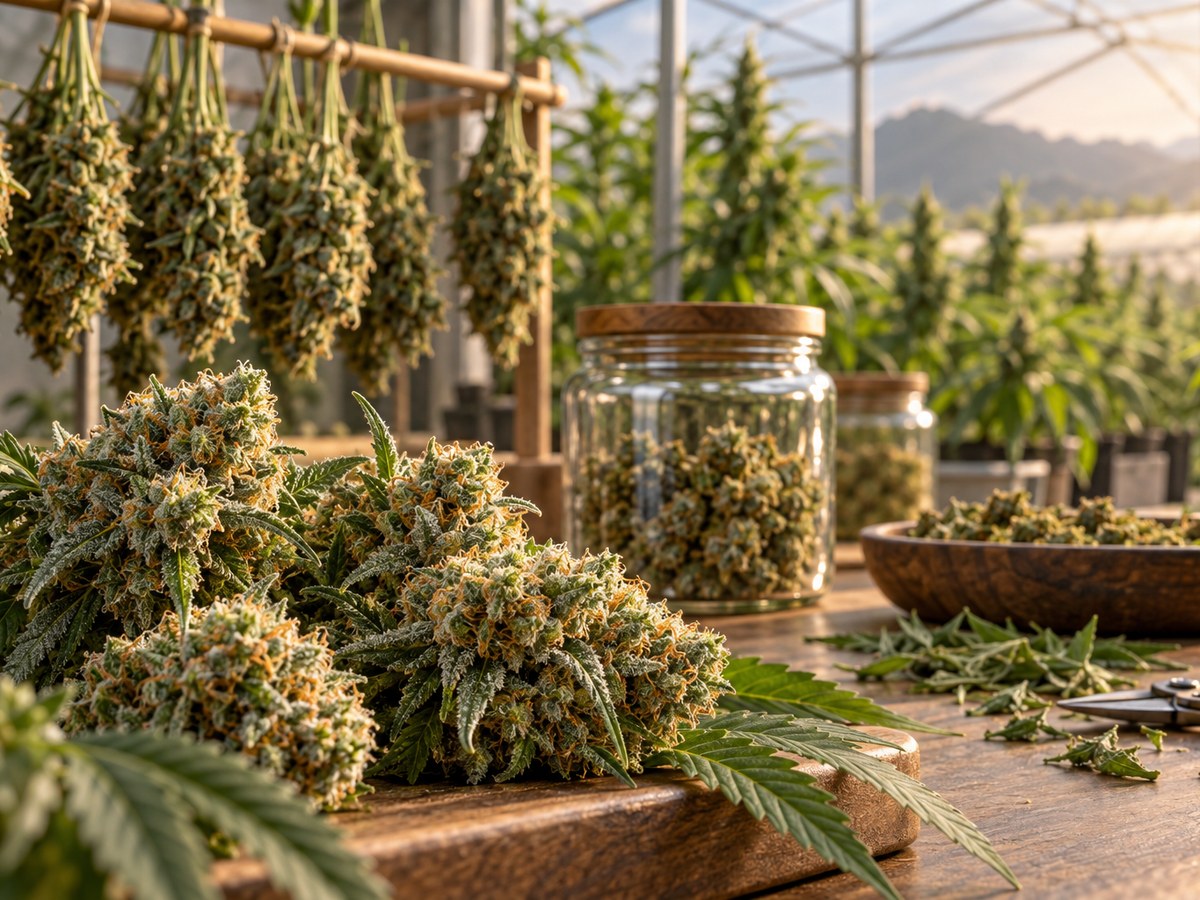
Cannabis quality is often reduced to one visible characteristic or a THC percentage. In practice, the final flower reflects an entire chain: genetics, cultivation, harvest, post-harvest handling, storage and control of the specific batch.
That is why two flowers that look very similar can have very different production histories and quality characteristics.
What does quality actually mean?
There is no single universal sign of quality. For medicinal plant material, relevant factors can include identity and origin, production consistency, physical condition, contamination control, documentation and batch traceability.
Appearance and aroma can provide visual or sensory information, but they do not by themselves establish safety or production quality.
Genetics
The first factor exists before cultivation even begins. Genetics influences the potential characteristics of the plant, including aspects of its chemical profile, structure and development.
However, genetics provides potential rather than a guarantee. The final result also depends heavily on cultivation and post-harvest handling.
Cultivation conditions
Environmental conditions, production materials, hygiene, plant management and the consistency of the cultivation process can all influence the resulting material.
This is why frameworks such as GACP examine the cultivation system rather than judging only the final flower.
Read more in our guide to Thailand Cannabis GACP →
Harvest
Harvest marks the transition from cultivation to post-harvest handling. The condition of the plant at that point becomes the starting material for drying and further processing.
Problems created earlier in the production chain cannot simply be corrected later through attractive packaging or storage.
Why drying matters
After harvest, plant material needs to move toward a more stable condition. A poorly controlled or uneven drying process can affect the characteristics of the resulting product.
Drying also influences how stable the material will be during later storage, making it a distinct part of professional post-harvest management.
What is curing?
Curing commonly refers to a period of conditioning and stabilisation after the main drying stage.
The purpose is to create more consistent plant material before longer-term storage and distribution.
The word curing on its own should not be treated as proof of quality. What matters is how consistently and hygienically the entire post-harvest process was managed.
Moisture and product condition
The condition of plant material after drying matters for stability during storage.
Excess moisture can create undesirable conditions, while excessively dry material can also lose some of its original characteristics.
Storage
Even a well-produced batch can change when it is stored poorly.
Light, heat, air, moisture and packaging conditions can influence plant material after production. Quality therefore depends not only on cultivation but also on what happens after the product leaves the cultivation site.
Batch age
Cannabis plant material does not remain unchanged indefinitely.
Its physical condition and chemical profile may evolve over time, which is why production, packaging and testing dates can help provide context for a particular batch.
Contamination and safety
An attractive flower cannot visually demonstrate the absence of every possible contaminant.
Laboratory testing may therefore be used to examine selected characteristics of a particular batch, depending on the testing programme.
We explain how to review this information in How to Read a Cannabis COA →
Why aroma does not prove quality
Aroma is one characteristic of plant material, but intensity alone does not establish origin, safety or production quality.
The same applies to colour, visible trichomes and flower density. These features can be observed, but they do not replace traceability or laboratory information.
High THC does not automatically mean high quality
A THC result describes one part of the chemical profile of a tested sample.
It does not explain how the plant was cultivated, how the batch was stored or which additional safety tests were performed.
Using THC alone as a quality ranking is therefore an oversimplification.
Where GACP and COA fit
GACP and COA provide information about different parts of the quality chain.
GACP primarily relates to cultivation and collection practices. A COA reports laboratory findings for a particular tested sample or batch.
See our direct comparison in GACP vs COA →
What consumers can look for
Rather than searching for one perfect quality indicator, it is more useful to look at overall transparency.
Is the origin clear? Can the batch be identified? Are dates available? Can laboratory results be linked to the product? Is there information about how it was handled and stored?
The more of these questions have clear answers, the more context is available for evaluating a product.
The takeaway
Quality is created across an entire chain:
genetics → cultivation → harvest → drying → curing → storage → laboratory control → documentation.
That is why appearance or a high THC percentage cannot tell the entire story of a cannabis product.
Continue with our guides to Thailand Cannabis GACP →, GACP vs COA → and Cannabis in Thailand in 2026 →